Tim Cook: The Visionary Behind Apple’s Success

midtoad.org – Timothy Donald Cook was born on November 1, 1960, in Mobile, Alabama. Raised in the small town of Robertsdale, Cook’s early life was grounded in a strong work ethic and a commitment to education. He graduated from Auburn University in 1982 with a degree in Industrial Engineering and later earned an MBA from Duke University’s Fuqua School of Business.

Career Before Apple

Before joining Apple, Tim Cook held various positions in the technology and electronics industries. He spent 12 years at IBM, where he managed North American fulfillment, contributing to the company’s success in PC manufacturing. Cook later served as the Chief Operating Officer of the Reseller Division at Intelligent Electronics and was Vice President of Corporate Materials at Compaq for six months.

Joining Apple

Tim Cook joined Apple in March 1998 as Senior Vice President for worldwide operations. His role involved refining Apple’s supply chain and improving its manufacturing efficiency, which played a crucial part in the company’s turnaround during the late 1990s. Cook’s strategic decisions in outsourcing manufacturing to Asia helped Apple cut costs and improve product quality.

Rise to CEO

In August 2011, Tim Cook was appointed the CEO of Apple, succeeding the legendary co-founder Steve Jobs. Under Cook’s leadership, Apple expanded its product line and entered new markets. He oversaw the development and launch of groundbreaking products such as the iPhone, iPad, Apple Watch, and AirPods, solidifying Apple’s position as a leader in innovation.

Leadership Style and Achievements

Known for his meticulous attention to detail and operational expertise, Tim Cook has transformed Apple into one of the world’s most valuable companies. He emphasizes ethical business practices, focusing on sustainability and privacy. Cook advocates for diversity and inclusion, and under his leadership, Apple has made significant strides in renewable energy initiatives.

Legacy and Impact

Tim Cook’s tenure as CEO has been marked by significant milestones, including Apple’s transition to a services-oriented business model, increasing its reliance on revenue from services like Apple Music, iCloud, and the App Store. Cook’s vision for Apple extends beyond technology, as he continues to champion social issues like privacy rights and environmental sustainability.

Conclusion

Tim Cook’s journey from a small-town upbringing to becoming the CEO of Apple is a testament to his leadership and visionary approach. His ability to maintain Apple’s legacy of innovation while steering the company towards new horizons has left an indelible mark on the technology industry. As Apple continues to evolve, Cook’s influence will undoubtedly shape the company’s future endeavors.
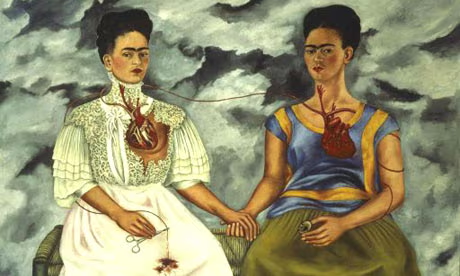
Iconic Women in the Arts: Visionary Vanguards

midtoad.org – Throughout history, the arts have been a powerful medium for expression, innovation, and societal change. Within this dynamic landscape, women have played a pivotal role, not just as contributors but as visionaries who have pushed the boundaries of creativity and challenged the status quo. These iconic women in the arts have left indelible marks on the cultural tapestry, inspiring generations and paving the way for future artists. This article celebrates a few of these visionary vanguards, whose contributions have been as diverse as they are impactful.

Frida Kahlo: The Painter of Pain and Passion

Frida Kahlo, a Mexican painter known for her many portraits and self-portraits, is an emblematic figure of 20th-century art. Her work is distinguished by its vibrant colors and emotional depth, often exploring themes of identity, postcolonialism, gender, class, and race in Mexican society. Despite facing significant health challenges throughout her life, Kahlo’s art and bravery have made her a symbol of female empowerment and resilience.

Maya Angelou: The Poet of Phenomenal Womanhood

Maya Angelou was an American memoirist, poet, and civil rights activist. Her work, which spanned several genres, is celebrated for its exploration of themes such as personal identity, family, and social and political issues. Angelou’s most famous poem, “Phenomenal Woman,” has become an anthem for women’s empowerment. Her life and work continue to inspire, demonstrating the power of the written and spoken word to effect change.

Yayoi Kusama: The Infinity Queen

Yayoi Kusama is a Japanese contemporary artist who has made significant contributions to the art world with her iconic polka dots and infinity mirror rooms. Her work transcends traditional boundaries, encompassing painting, sculpture, performance, and installation art. Kusama’s themes often revolve around mental illness, feminism, and the obsessive self, making her one of the most influential artists of the 20th and 21st centuries.

Beyoncé: The Music and Visual Arts Innovator

Beyoncé, known globally as a singer, songwriter, and performer, has also made significant strides in the visual arts through her music videos, live performances, and albums that blend music with visual storytelling. Her work often addresses issues of race, gender, and empowerment, making her not just a pop icon but a cultural force. Beyoncé’s “Lemonade,” for example, was a visual album that received critical acclaim for its artistic and political commentary.

Zaha Hadid: The Architect of Curves

Zaha Hadid was an Iraqi-British architect known for her radical deconstructivist designs. Her buildings and structures, characterized by their sweeping curves and dynamic forms, have left a lasting impact on the architectural landscape. Hadid’s work challenges traditional notions of space and form, making her one of the most influential architects of the 21st century.

Conclusion

These visionary women in the arts have not only left their mark on their respective fields but have also inspired countless others to pursue their passions and challenge societal norms. Their contributions remind us of the power of art to reflect, critique, and transform the world. As we continue to celebrate the achievements of women in the arts, we look forward to the new vanguards who will carry the torch, continuing to push the boundaries of creativity and innovation.