
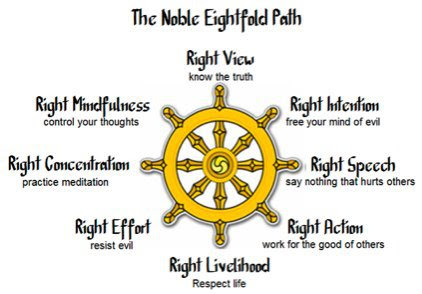
midtoad.org – The Eightfold Path is a core component of Buddhism, serving as a practical guide for ethical and mental development with the goal of freeing the individual from attachments and delusions; leading to understanding, and thus to an end of suffering. This path is divided into three basic divisions: wisdom, ethical conduct, and mental discipline. Each division is further broken down into specific practices that, when followed, are believed to lead to enlightenment and liberation from the cycle of rebirth and suffering.
The Three Divisions of the Eightfold Path
Wisdom
The first division of the Eightfold Path is Wisdom, which includes Right Understanding and Right Intention. Right Understanding involves comprehending the Four Noble Truths: the truth of suffering, the truth of the cause of suffering, the truth of the end of suffering, and the truth of the path that leads to the end of suffering. Right Intention is the resolve to practice the path and to cultivate goodwill, non-ill will, harmlessness, and non-cruelty.
Ethical Conduct
The second division, Ethical Conduct, encompasses Right Speech, Right Action, and Right Livelihood. Right Speech involves abstaining from lying, gossip, harsh speech, and idle chatter. Right Action includes refraining from harming living beings, stealing, and engaging in sexual misconduct. Right Livelihood means earning a living in a way that does not cause harm to others, such as avoiding professions involved in weapons, slavery, meat production, or intoxicants.
Mental Discipline
The final division, Mental Discipline, consists of Right Effort, Right Mindfulness, and Right Concentration. Right Effort involves the energy to foster wholesome states of mind and to prevent unwholesome states from arising. Right Mindfulness is the practice of maintaining awareness of the body, feelings, mind, and phenomena. Right Concentration is the practice of unifying the mind through meditation, leading to a state of calm and clear awareness.
Practicing the Eightfold Path
The Eightfold Path is not a sequence of steps but rather a set of principles to be integrated into one’s life. It is a practical guide that encourages individuals to live ethically and mindfully, to develop wisdom and understanding, and to cultivate a compassionate and kind heart. The path is not easy, but it is a journey that promises profound personal transformation and the ultimate goal of liberation from suffering.
Integrating the Path into Daily Life
To practice the Eightfold Path, one must be intentional about incorporating these principles into daily life. This might mean reflecting on one’s actions and speech to ensure they align with the path, meditating to cultivate mindfulness and concentration, and studying the teachings to deepen understanding.
The Benefits of Following the Path
Following the Eightfold Path can lead to a more peaceful and contented life. It can help individuals to overcome negative mental states, such as greed, hatred, and delusion, and to cultivate positive states, such as generosity, loving-kindness, and wisdom. The path is a journey of self-discovery and personal growth, leading to a deeper understanding of the nature of reality and the end of suffering.
Conclusion
The Eightfold Path is a comprehensive guide to ethical and mental development that offers a path to enlightenment and liberation. By integrating these principles into daily life, individuals can lead more meaningful and fulfilling lives, free from the cycle of suffering. The path is a journey that requires commitment and effort, but the rewards are profound and transformative. Whether one is a Buddhist or not, the teachings of the Eightfold Path offer valuable insights into living a life of wisdom, compassion, and ethical conduct.
